


|
News Source: topspeed.com
|
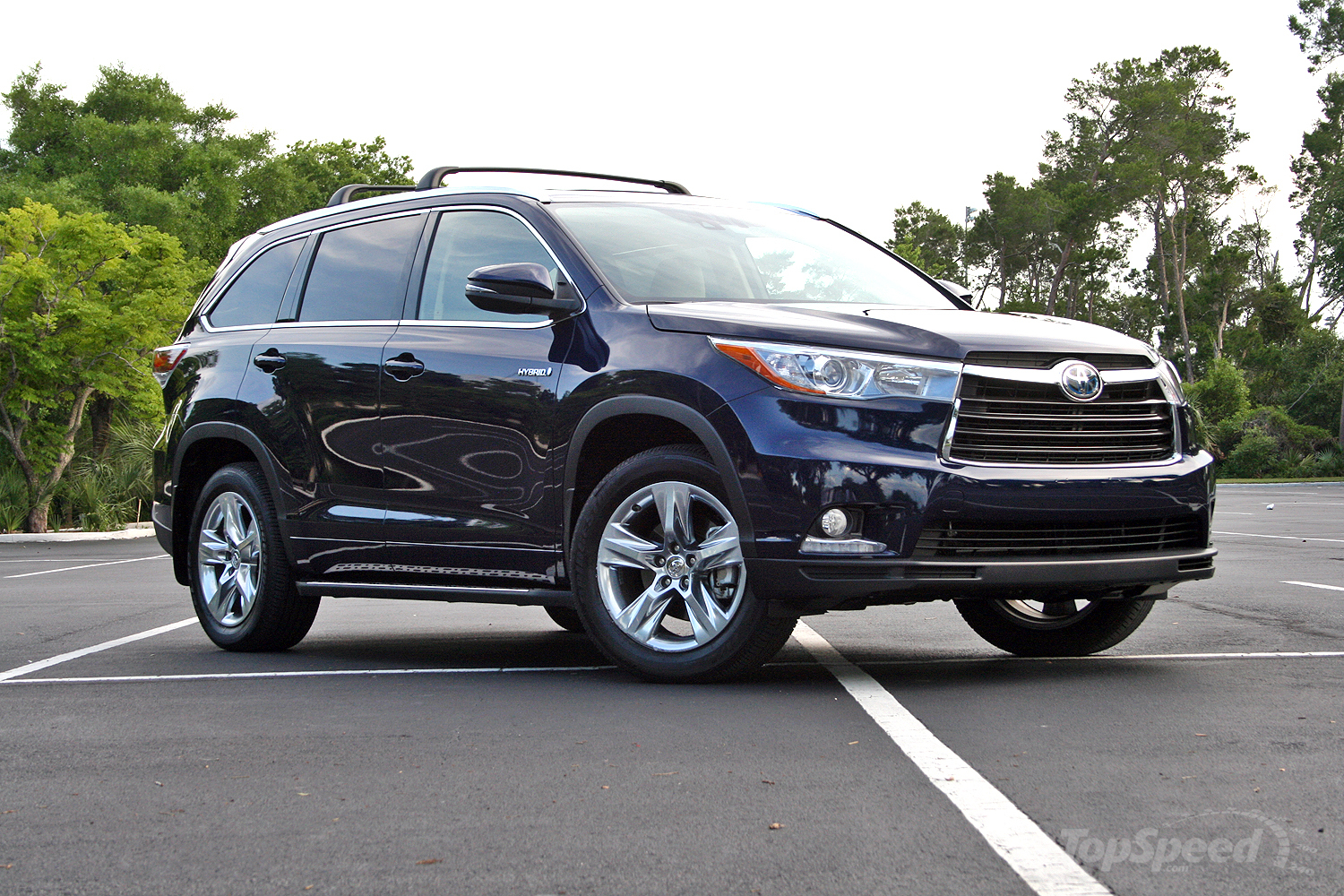
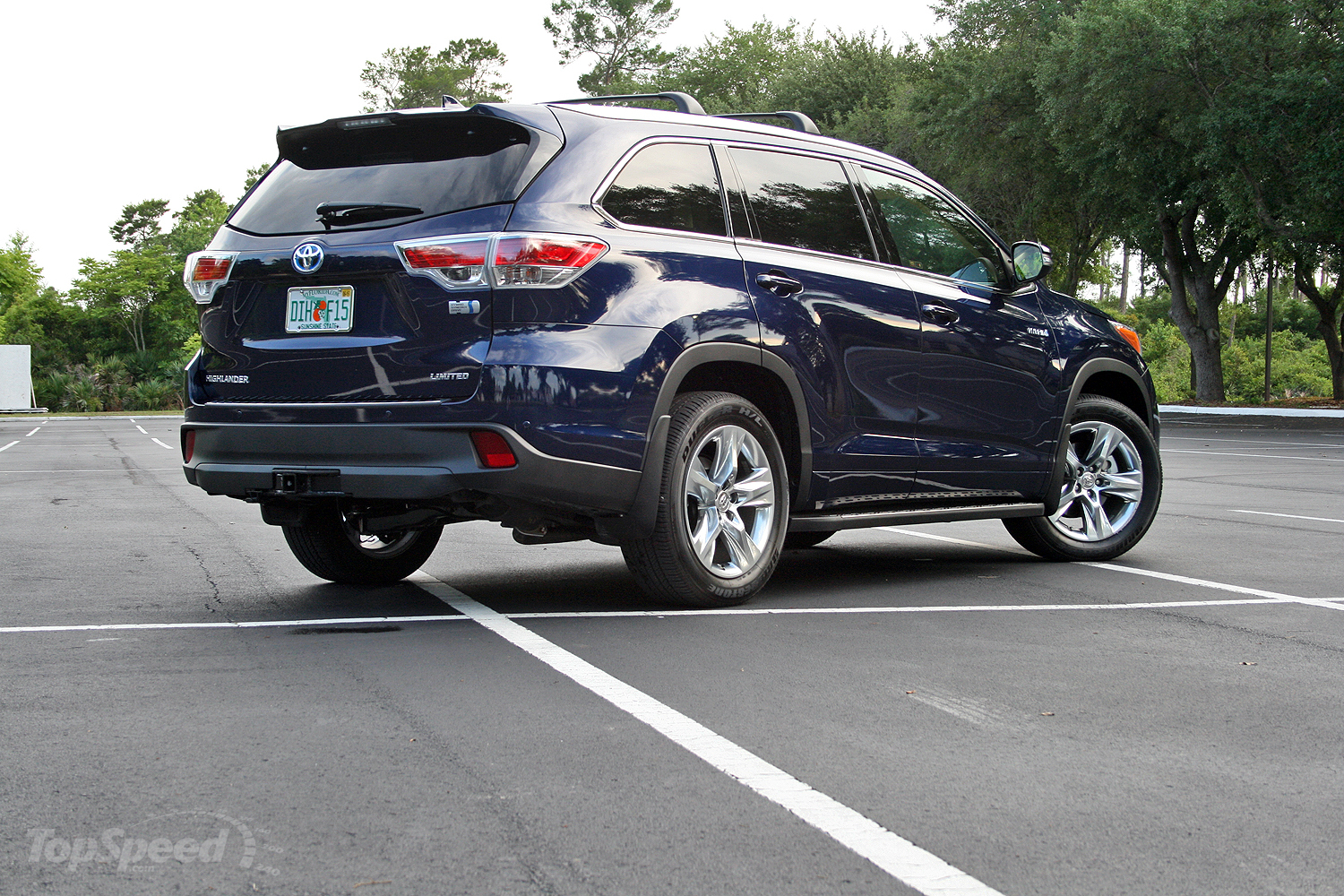
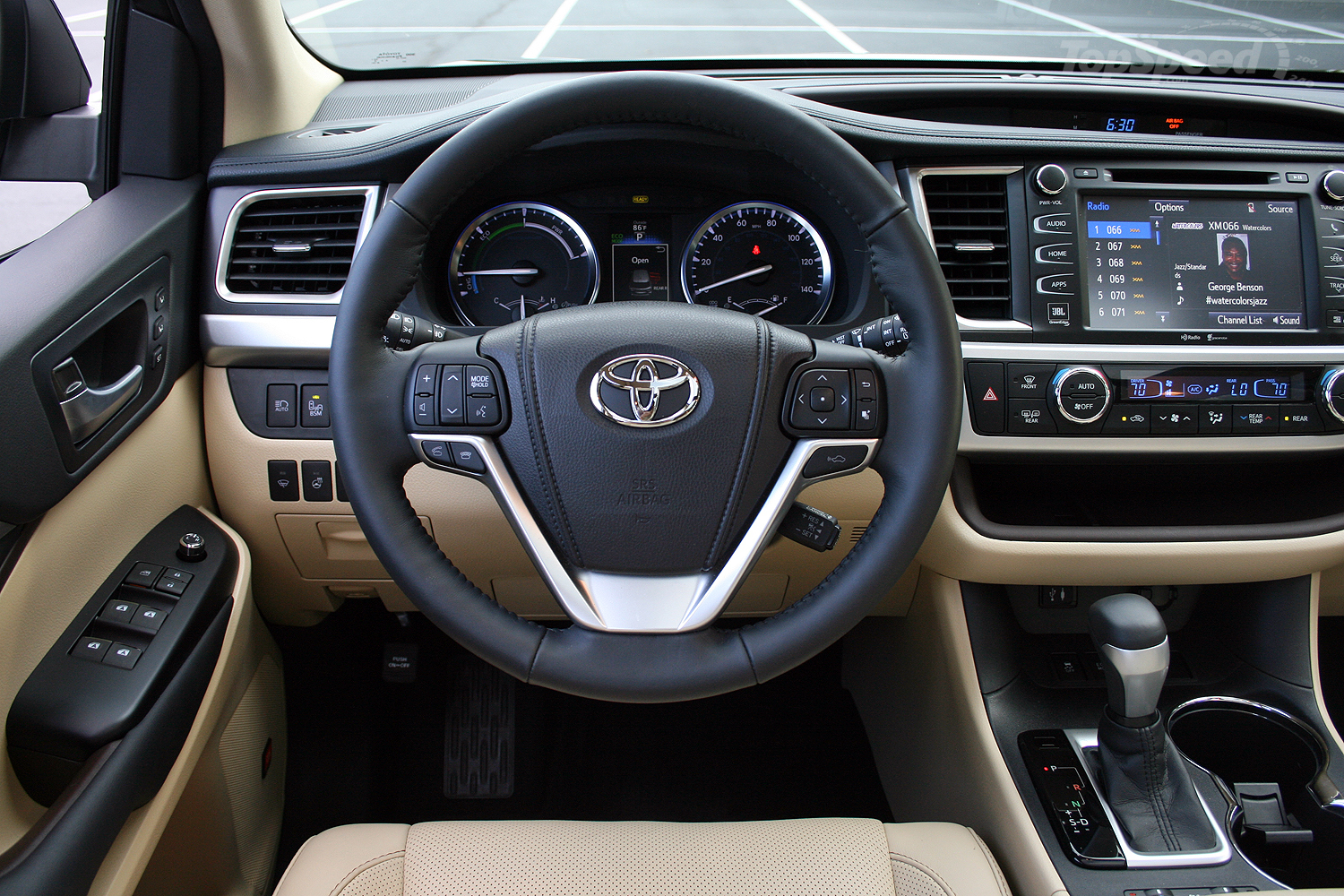
The Highlander might have started life back in 2001 as a midsize crossover, but over time it has transformed into a larger, three-row people mover that offers an alternative to the minivan segment. Sure Toyota offers the Sienna, but those who won’t rock the Swagger Wagon can take refuge in the Highlander. What’s more, this crossover offers a hybrid powertrain and an AWD system that’s available together – giving this seven-passenger vehicle the ability to traverse slippery terrain while getting an EPA-estimated 28 mpg combined. That’s impressive. I recently spent a week with a 2015 example of Toyota’s third-generation Highlander. My tester came loaded to the gills in its Limited trim with the hybrid powertrain and yes, AWD. A healthy list of options pushed the price toward the $54,000 mark, making it competitive with several luxury-brand crossovers, though it doesn’t carry the ostentatious luxury vibe. So how well does the Highlander carry out its duties? Continue reading to find out. They Highlander has certainly morphed into a larger crossover in nearly every dimension. It’s length now accommodates that third-row seat while the extra width makes interior comfort downright superb in the first two rows. Stylistically, the Highlander’s looks land halfway between conservative and outlandish Stylistically, the Highlander’s looks land halfway between conservative and outlandish – with it’s overall looks taking the more traditional look. Pick out the details, however, and the interest starts to build. Those taillights, for example, jut outward from the body in an attempt at taming the wind as it swirls around the back. They also looks pretty cool. Other adornments include the chrome trim around the side windows, the large spoiler over the rear glass, and the large front grille with its multi-tiered design. A few points that really stood out on my tester were how well-integrated both the side steps and the trailer hitch receiver were. Both optional features added to the Highlander’s overall design and functionality. And even with its hybrid powertrain, the Highlander can still tow 3,500 pounds. It’s clear Toyota spend a lot of time talking to moms and dads on how to design an interior that works. There are cubby spots everywhere, entry and exit into the rear seats is easy for little ones, and cup holders abound. The only non-family-friendly aspect about my tester was its cream-colored interior, which is destined to show ever spot of spilled juice and every dirty footprint. The only non-family-friendly aspect about my tester was its cream-colored interior Up front, the dashboard comes complete with Toyota’s Entune infotainment system. The unit and its software work well, but are starting to look a tad bit dated. It’s functionality, however, isn’t compromised by its aesthetics. Below that is the HVAC system. Its controls are intuitively laid out with triple zone control — the third zone is the rear. Below that is the handy shelf that’s been making its way into various Toyota products. My wife particularly found the shelf appealing, though by the end of the week she already had it packed with random junk. The center console also has room for random junk – tons of it. It offers a movable tray for smaller items, but it’s otherwise as deep as it is tall – reaching down to the floor. Behind the wheel, the driver has plenty of steering wheel controls that reduce the need to reach for the center stack. The gauge cluster is easily readable with analog gauges for speed, fuel, coolant temperature, and the eco meter. A tall center information screen shows everything from the energy monitor to the radio station. The second-row occupants enjoy comfortable seats that move fore and aft, as well as recline. Center-folding arm rests and heated cushions add to the experience. A folding center tray offers two cup holders and a storage bin when in place, and easy passage to the third row when folded down. Rear HVAC controls are mounted to the back of the center console and offer temperature, fan speed and airflow controls. There’s even an auto setting. Kids and tweens should have no problems getting comfortable in the third row Third-row occupants will find the quarters fairly cramped. Sure, adults will fit, but the ride would likely get tiresome after an extended time. Kids and tweens should have no problems getting comfortable. Cup holders and cubby holes are present for even these three passengers. Of course, the Highlander is still a crossover, so its second- and third-row seats fold flat, offering a ton of cargo space. But it’s not all good news to report. I did have a few ergonomic issues while driving. First, the Entune infotainment screen is simply too far away. I found myself really reaching to manually tune the radio. The passenger would have the same issue with the volume knob. Second, the Highlander has a handy convex mirror mounted in the roof for keeping an eye on the kids. It works well at its intended purpose, but when deployed, it blocks roughly half of the visibility in the rearview mirror. Combined with the electric motors, the engine produces 280 horsepower and 215 pound-feet of torque The Highlander is available with three powertrain options: a 2.7-liter four-cylinder, the 3.5-liter V-6, and the range-topping hybrid system. My tester’s hybrid powertrain consisted of the 3.5-liter V-6 mated to a CVT and three Permanent Magnet Synchronous motors. Two of the motors reside up front to power the front wheels while one motor pulls duty out back, giving the hybrid AWD. Combined with the electric motors, the drivetrain produces 280 horsepower and 215 pound-feet of torque – enough to motivate the crossover to 60 mph in 7.6 seconds. The sprint doesn’t feel particularly quick thanks to the CVT, but the power is there. With this being a hybrid, fuel economy is a top priority. The EPA rates the Highlander Hybrid at 27 mpg city, 28 mpg highway, and 28 mpg combined. During my time and with plenty of mixed driving, my weekly average ended at 26.0 mpg. Of course, the majority of my driving time wasn’t spent hypermiling or even concerned with fuel economy, so the EPA’s estimates are likely obtainable for someone driving more conservatively. Driving the Highlander is a relaxing experience. Heated and cooled heats add to the welcoming environment. Its steering is accurate, though it feels somewhat disconnected with the wheels. It’s light, on-center feel is good with hardly any dead space. Once in a corner, the steering stiffens up nicely. Outward visibility is good in spite of its size, with the blind spot monitoring system helping greatly. The CVT does drone under hard acceleration, but is otherwise quiet Body roll is well controlled and brake dive is minimal. Speaking of braking, the regenerative brakes send power to the batteries when in use, but also make pedal travel non-linear. That’s especially the case when the regen system turns off as the vehicle drops under roughly 10 mph. The pedal feel changes and smooth braking is harder to achieve. Otherwise, the brakes work well at slowing this 4,861-pound CUV’s momentum. As I mentioned before, acceleration is moderate with 60 mph coming in under eight seconds. The CVT does drone under hard acceleration, but is otherwise quiet. Driving around town is an effortless event with the engine turning on and off as needed. Stop-and-go traffic results in mostly electric use, letting gas mileage stay near its 27-mpg city rating. On the highway, cruising at speed is easy work thanks to the V-6. Passing power is adequate, though the CVT does show the typical negative attributes. Overall, the driving experience is pleasurable and effortless. The Highlander comes in seven trim levels, with the base model starting at $29,665. My tester arrived wearing a Limited badge and came with the Platinum package. It’s base price before options listed at $49,990. The option list included carpet floor mats ($225), remote engine start ($499), paint protection film ($395), trailer hitch with wiring harness ($699), running boards ($599), cargo cross bars ($350), and a rear bumper protector ($129). Add on the $885 delivery fee for a grand total of $53,771. |

|

| Copyright © 2026 • www.showcar.com.au • Showcar Pty. Ltd. • Contact info@showcar.com.au | sydney web design & development by Webski |